MVP & PROOF OF CONCEPTS FOR MOBILE APPS
MVP app development and PoC app approaches are decisive milestones in mobile product development. They create a reliable basis for all subsequent iterations - from the initial idea to publication in the App Store and Google Play. Especially for time-critical projects (optimized time-to-market), temporary projects such as studies, trade fair demos or internal presentations as well as complex initiatives with many unknowns, PoC App and MVP App help to validate mobile app ideas quickly and in a targeted manner.
Both methods minimize risks: a PoC app proves technical feasibility on the smartphone, MVP app development puts a lean, usable MVP app in the hands of real users - for measurable feedback, clear decisions and a focused roadmap within mobile app development.
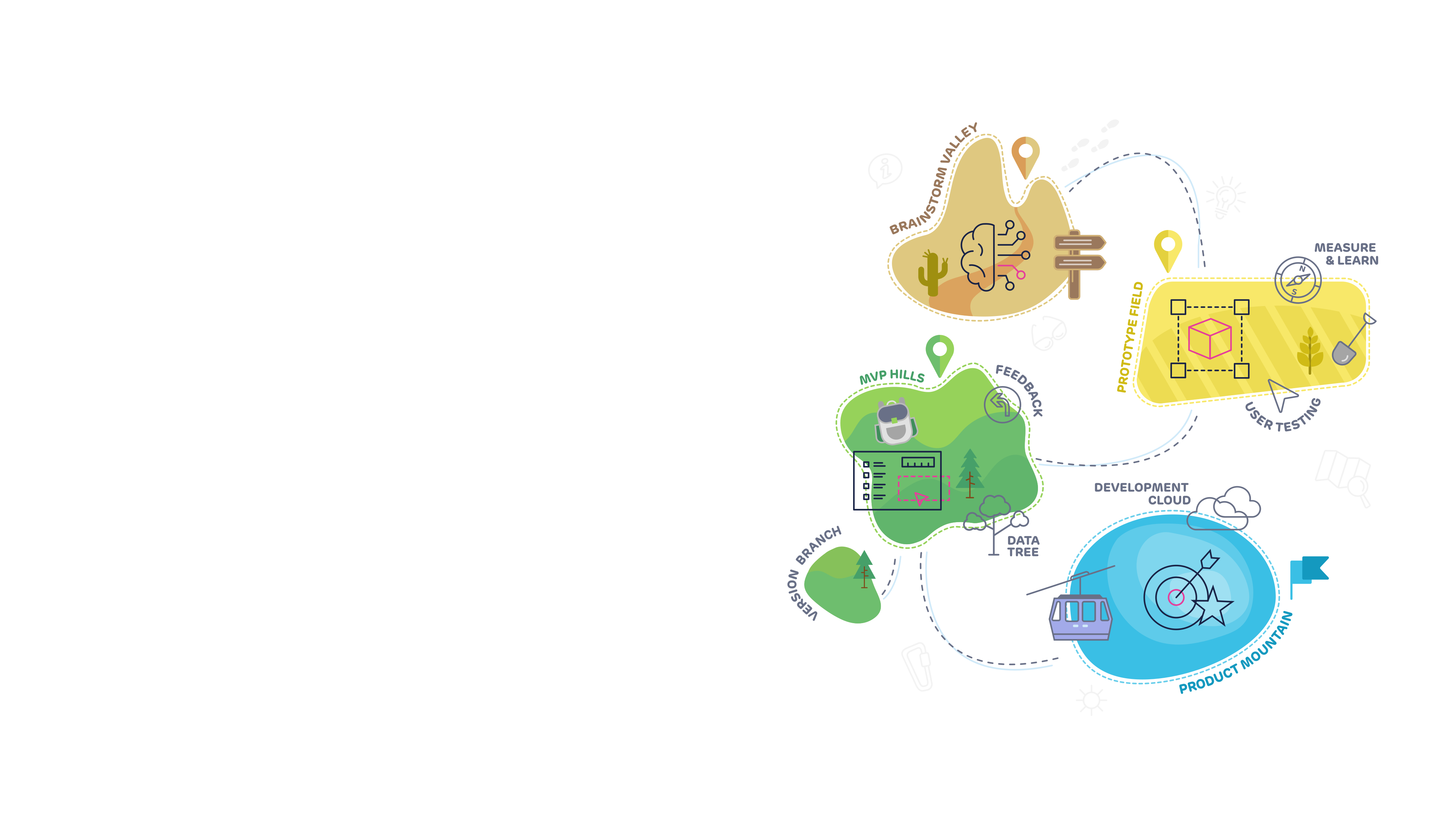
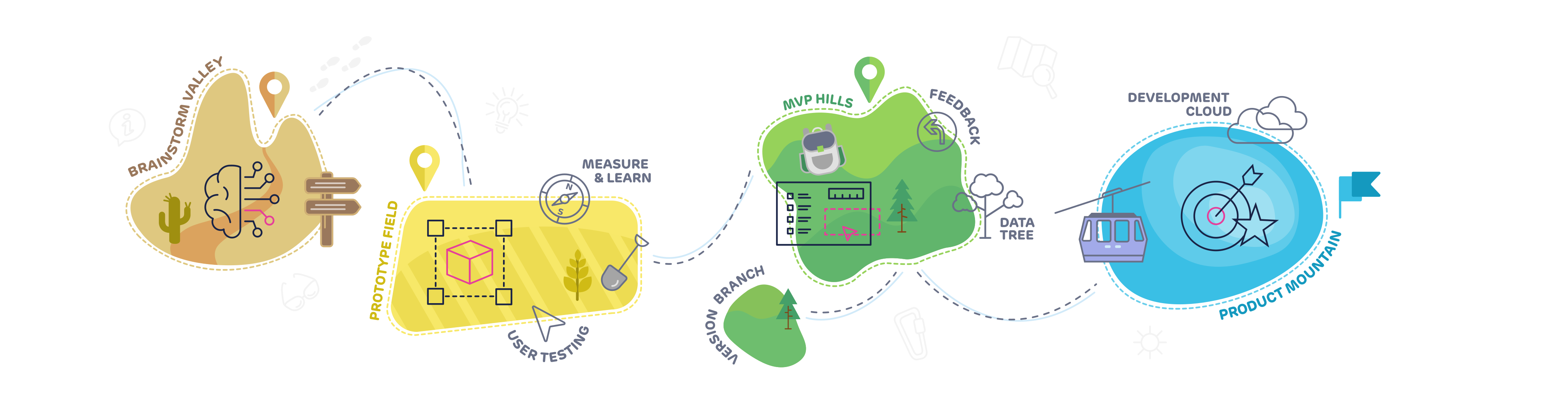
How do we proceed with app MVP development?
What exactly can we do for you in the area of APP MVP development?

Planning and development of app prototypes and MVP apps to illustrate your product
We create customized app prototypes and MVP apps to make UX flows, navigation concepts and core functions tangible - ideal for early user feedback and stakeholder coordination in MVP app development.

Development of an individual mobile product - hybrid with React Native or Capacitor
We realize your product as a hybrid app (React Native or Capacitor) - in line with your business model, integrations and scaling goals. The app prototype becomes a resilient MVP app that can be iterated quickly and rolled out across platforms.

Fresh app design with professional mobile UX and modern UI
We design intuitive touch interfaces, low-barrier interactions, clear information architectures and visual systems that work on all devices. The result has a direct impact on mobile app development and MVP app development.

Agile way of working: Scrum, Kanban & Mobile CI/CD
Flexible processes, release trains, automated builds, TestFlight/Play Console distribution and continuous quality assurance keep your MVP app mobile on track - from the PoC app to the app prototype to the store release.

Technical infrastructure for MVP app development
Stable backends (e.g. cloud/serverless, headless CMS, real-time), secure APIs and scalable architectures form the foundation of mobile app development - so that your MVP app runs reliably and grows.

Flexibility in the process and with your app requirements
We react to new findings, prioritize features based on data and adapt roadmaps - for a smart fit of product, market and budget. This keeps MVP app development adaptable and results-oriented.
Customer examples of MVP apps
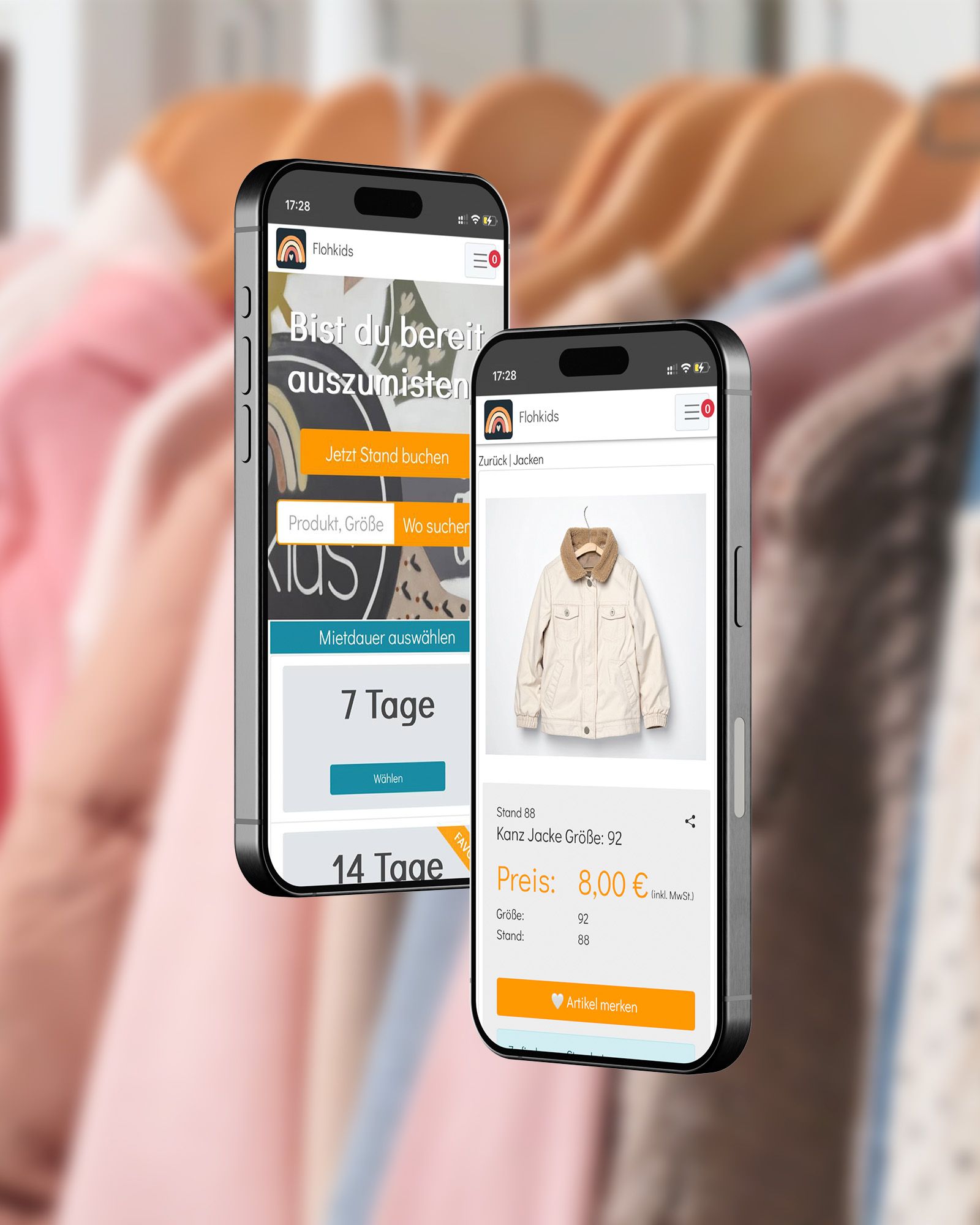

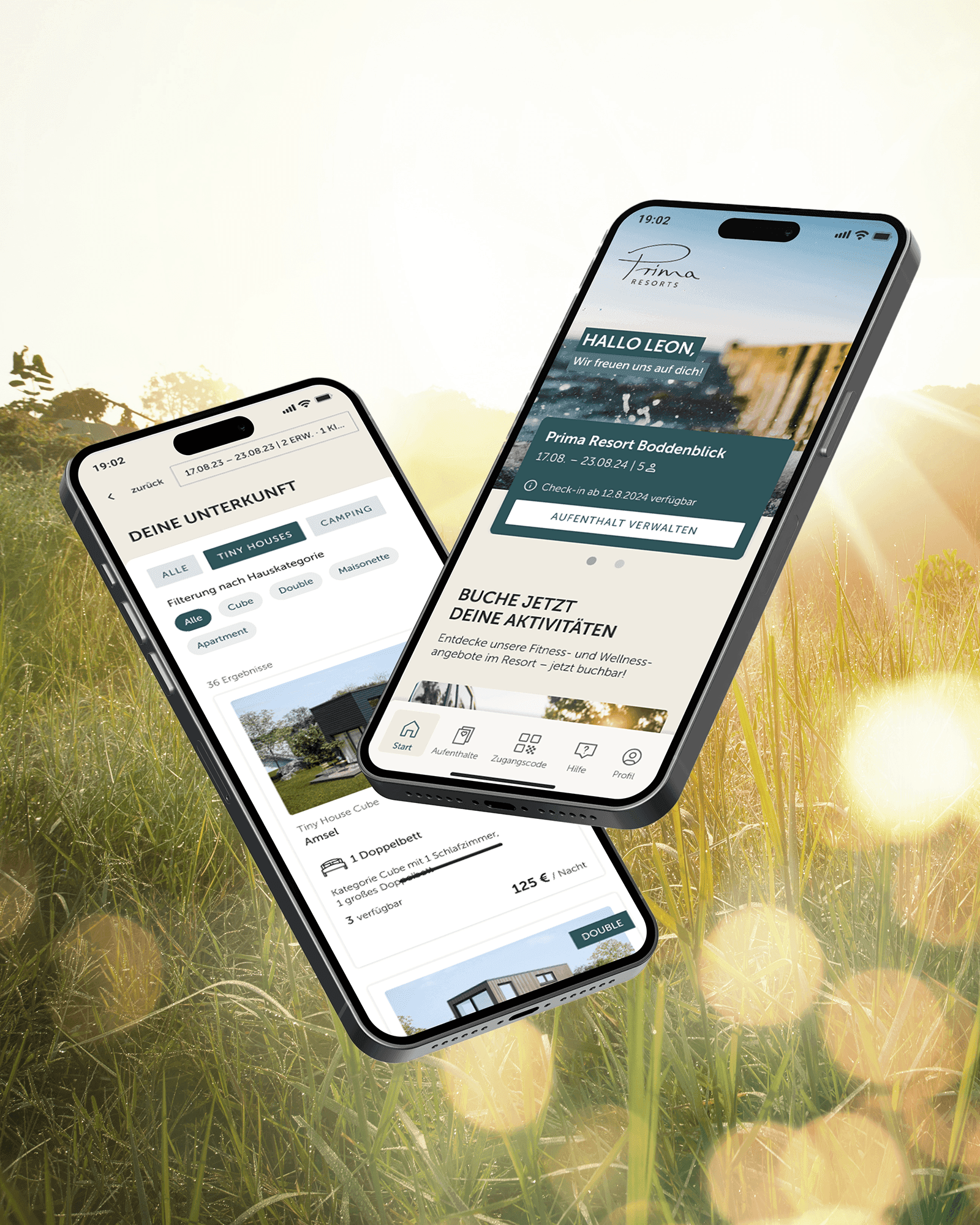
Our customers in the field of app development
„The devsuit team's expertise in app development and their advice in the areas of web technologies and interfaces has convinced us time and again and ensured successful project work.“
Martin Jablonski-Zimare, Managing director of ideenmanufaktur
OUR SERVICES, TAILOR-MADE FOR YOU
Get in touch with us
Do you have any questions or suggestions? Send us a message and we will get back to you.

Certified know-how
PROCESS OF MVP DEVELOPMENT

Requirements analysis & ideation
To keep your MVP lean, we focus on the core benefit - what users really need to experience tangible added value. To do this, we create a light app prototyping (clickable screens) and short user flows so that everyone involved has the same picture in mind. A PoC app step (proof of concept) is useful if there is a critical unknown - for example: Does a certain device function work stably enough? Can an external service be securely connected?
At the same time, we clarify the framework conditions: Data protection (GDPR), access rights, necessary integrations and store aspects (e.g. authorizations, consents, payment processes). The result: a focused MVP scope, prioritized according to impact and effort - the basis for rapid, visible progress in MVP app development.


Prototyping & conception
Technically, we rely on hybrid development with React Native or Capacitor. We decide together which device functions (e.g. camera, push, files) are really needed in the first increments - everything else is deliberately left "for later". For recurring tasks such as login, profile, lists/details or form processes, we design reusable building blocks so that the team can work quickly and easily expand later.
The result of this phase is an implementable concept with clear patterns and a pragmatic release plan: which parts first, what can wait, and how do we avoid detours?

Development & implementation
We pay attention to clear, robust basics: registration (as simple as possible), onboarding (as short as necessary), core function (crystal clear and reliable). We deliberately incorporate elements such as empty states, error messages and repeat actions (e.g. "Reload") - they are crucial for a good feeling when something goes wrong. For features that we are still unsure about, we use feature flags and small A/B tests (variant A vs. B) to check which is better received.
Quality assurance runs continuously: automated checks, manual "exploration" on relevant devices as well as crash and performance monitoring. "CI/CD" ensures that adjustments are quickly incorporated into test versions; feedback is promptly fed back into development. This keeps MVP app development agile without losing sight of the big picture.

Testing, Launch & Iteration
The launch itself ideally takes place in stages (keyword: "staged rollout"): First a small group, then more - that way we catch surprises quickly. Then the real strength of the MVP approach begins: learning and fine-tuning. We monitor KPIs (e.g. activation, recurrence, completion of the core action), analyse feedback and prioritize the next iteration.
Important additions work particularly well in this rhythm: guided onboarding (small tips at the right time), improved idle and error states, push notifications with caution (only relevant and clearly explained) or offline improvements (caching, later synchronization). Step by step, the MVP app grows into a stable, enhanced product - tailored more precisely to the needs of your target group with each cycle.
And how can we support you?
CONTACT OUR TEAM
We are your partner for customized software and IT solutions based in Berlin. You are welcome to arrange a non-binding initial consultation with us. We look forward to your project!
Write a message Call nowMVP development & PoC: Bring your product to market faster
Saving time and money
An MVP focuses on your app’s core functionality—what users really need. This way, you’re not investing in “nice-to-haves,” but in features that have a proven impact. Through short sprints and early test versions, you can quickly create an app prototype that evolves into an MVP app capable of gathering feedback from real-world use. This reduces iterations, saves on design and development costs, and gets you to reliable insights faster. Especially in mobile app development (React Native/Capacitor), you also benefit from a shared codebase that serves both platforms—this reduces effort and shortens time-to-market.
Risk minimization
With a proof-of-concept (PoC) app, you can test in advance whether critical features work—such as secure login, offline functionality, or specific device access. Only once these hurdles have been cleared is more budget allocated to MVP app development. This allows assumptions to be verified early on, avoids costly surprises, and ensures that technical risks are specifically addressed. The result: realistic planning, transparent decisions, and a product roadmap that makes visible progress instead of hitting dead ends.
Early customer feedback
A usable app prototype quickly reveals whether users can find what they’re looking for and whether the core functionality works intuitively. Short surveys, in-app feedback, and simple metrics (e.g., “first conversion”) provide clear insights into what to keep, what to remove, and what comes next. This learning from the actual product is at the heart of MVP app development: you’re not developing blindly, but based on real-world usage. This leads to better decisions—and to an app that tangibly adapts to the needs of its target audience.
Faster time to market
A lean scope, clear priorities, and a hybrid stack (React Native/Capacitor) – this approach allows you to quickly develop an MVP app that can be distributed via TestFlight or Google Play (internal/closed tracks). You gain visibility early on, collect reviews, and build trust. The initial release is followed by a phased rollout: small at first, then broader. This allows you to safely identify and address potential issues while accelerating the market launch in a controlled manner. At the same time, the app grows in short cycles—predictably and with measurable progress.
Flexibility and adaptability
MVP means: Changes are built in. New insights are incorporated directly into the roadmap; features can be selectively enabled using feature flags and disabled again as needed. This allows you to test ideas on a small scale without jeopardizing the big picture. This creates agility—an advantage when markets shift rapidly or priorities change. In mobile app development, this keeps your team capable of taking action: short decision-making paths, clear decisions, and visible results.
Create added value
The focus is on business value: What core action delivers the greatest benefit to your target audience—and the strongest impact for your company? We refine this “core action,” eliminate friction, and guide users there quickly. With each iteration, the experience becomes clearer: better copy, understandable idle and error states, helpful prompts at just the right moment. This is how an idea becomes an MVP app that truly helps—and is enjoyed by users.
Generate sales
An early, lean launch enables you to generate initial revenue—for example, through subscriptions, one-time purchases, or B2B licensing. Instead of waiting for the “perfect” big break, test users’ willingness to pay early on and see which packages resonate. This reduces business risk: you invest based on actual revenue and can test different pricing or offering variations on a small scale. This way, the MVP app gradually evolves into a sustainable model.
Creating a solid basis
We factor growth into our MVP from the very start: clear structures, easy scalability, and a setup that makes releases a breeze. What matters isn’t maximum complexity, but smart fundamentals that won’t get in the way later on. This includes transparent decision-making, a well-organized codebase, and simple processes for quality assurance and deployment. This keeps mobile app development stable—and allows your app to grow organically without any friction.
Questions and answers on MVP development and proof of concepts (PoC)
What are the differences between MVP development and Proof of Concepts (PoC)? What are the characteristics of these approaches and how do they help you to achieve your goals step by step? Find answers to these and other questions here.