HYBRID & CROSS-PLATFORM DEVELOPMENT
With hybrid app development, you can achieve iOS and Android with one code foundation - faster to market, more predictable in terms of budget, easier to maintain. As a mobile app development agency, we combine cross-platform app development with clean UX design, high-performance interfaces and a clear focus on business goals. Our stack: React Native and Capacitor (supplemented by PWA on request).

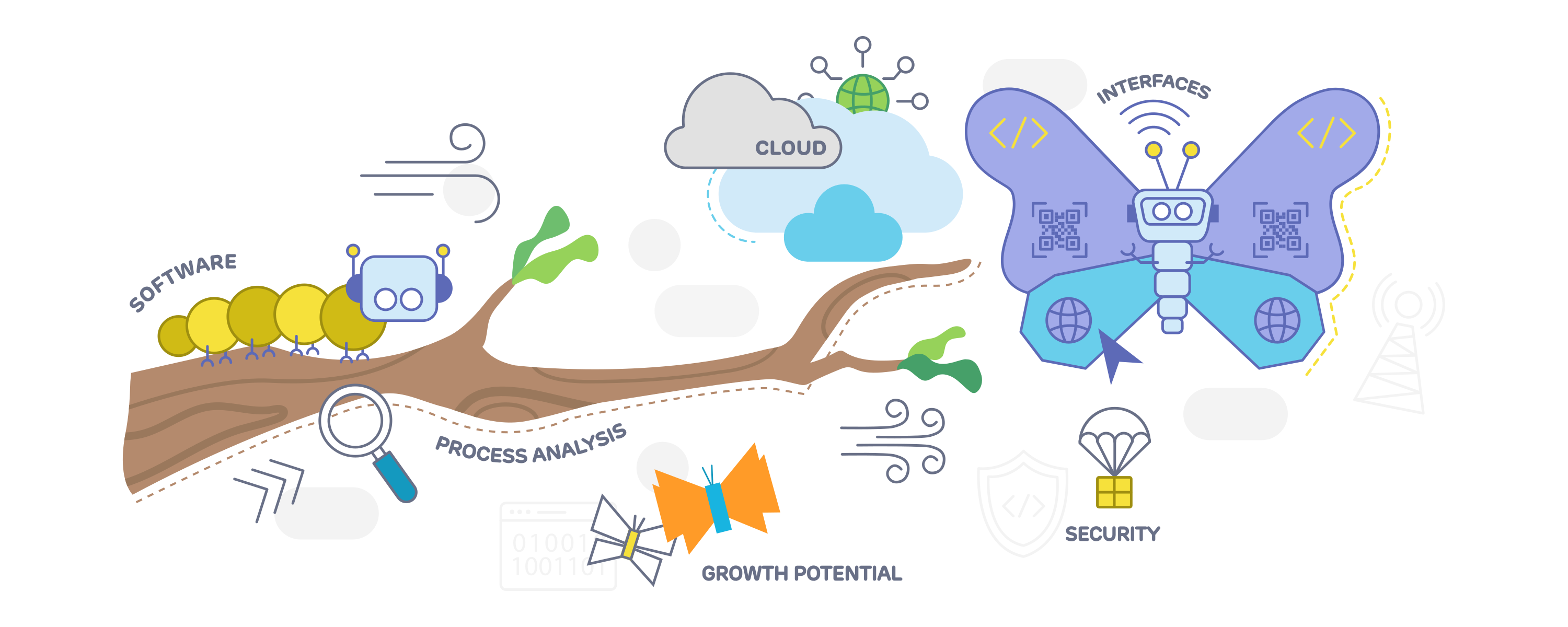
How do we proceed?
What exactly can we do for you?

MVP & prototyping for hybrid apps
From the idea to clickable prototypes to the first MVP version: we test hypotheses with real users - a core step in which hybrid app development shows its strengths.

Hybrid development with React Native or Capacitor
As a React Native agency and Capacitor agency, we implement your product cross-platform - with natural UI building blocks, stable bridges/plugins and a clean architectural cut that facilitates future growth.

Backend & interfaces for mobile
We design and develop APIs (REST/GraphQL), authentication, offline/sync and performance strategies so that your cross-platform app development is reliably supplied with data - today and tomorrow.

UX/UI & design systems for hybrid apps
Consistent patterns, clear navigation, states and accessible interactions - this is how hybrid app development feels native to users.

Publishing & Compliance
Store submission, authorizations, data protection texts, in-app purchases: Your mobile app development agency ensures that everything fits - with no surprises in the review.

Operation & further development
Monitoring, logs/reports, staged rollouts, roadmap work: we keep your hybrid app healthy, prioritize according to impact and continuously deliver added value.
Customer examples of hybrid apps
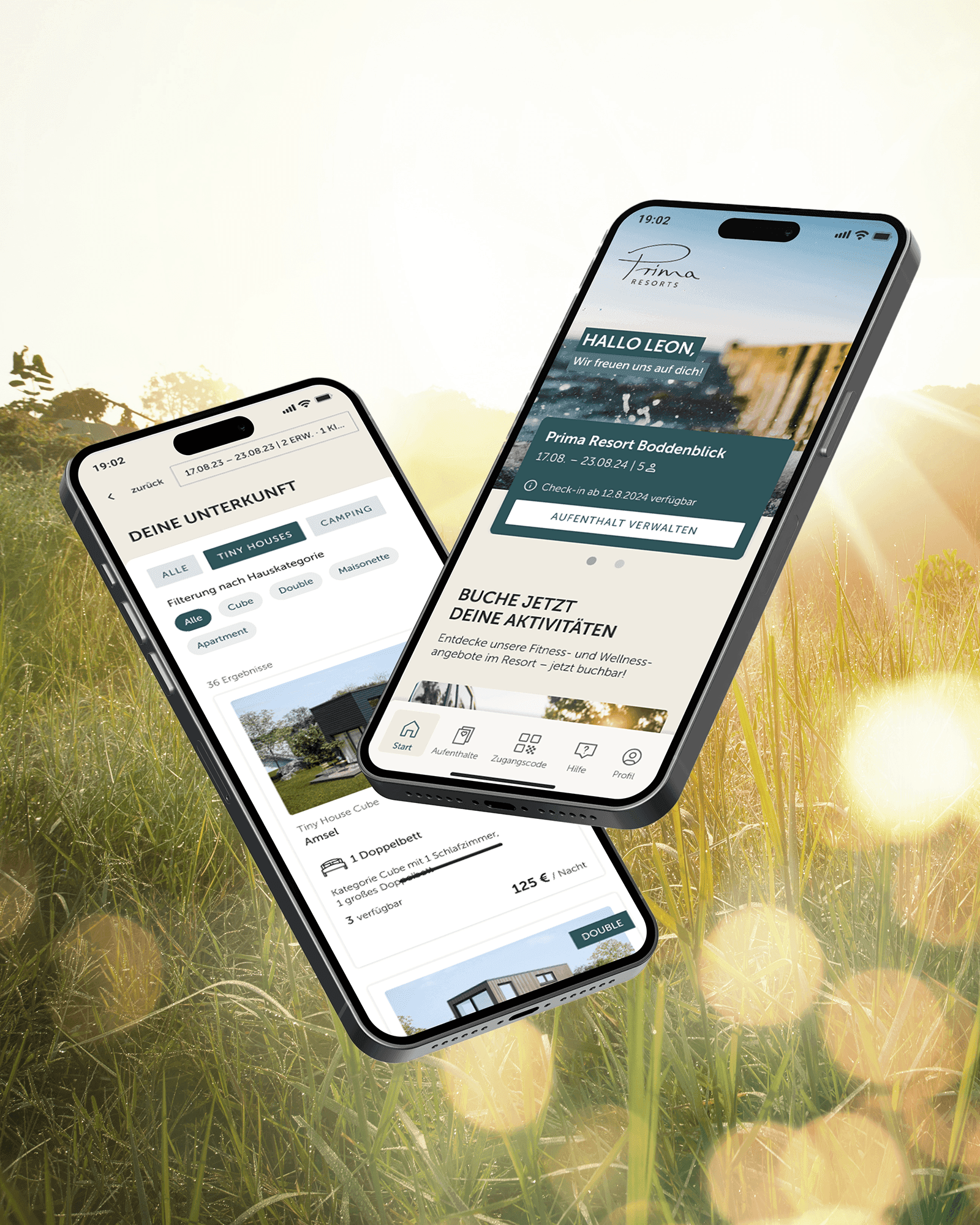


Our customers
„The devsuit team's expertise in app development and their advice in the areas of web technologies and interfaces has convinced us time and again and ensured successful project work.“
Martin Jablonski-Zimare, Managing director of ideenmanufaktur
OUR SERVICES, TAILOR-MADE FOR YOU
Get in touch with us
Do you have any questions or suggestions? Send us a message and we will get back to you.

PROCESS OF HYBRID APP DEVELOPMENT

Requirements analysis & app ideation
Data protection (GDPR), authorizations and necessary integrations also become concrete: What data is really needed? Who is allowed to see what? Which systems need to be connected? Your mobile app development agency summarizes the result in a focused MVP scope - the smallest meaningful version that has a real impact. This includes clear priorities, an initial roadmap draft and the certainty that we can quickly deliver visible results and learn based on real usage.


Prototyping & conception of the app
We describe which content appears on which screens, where data comes from and how it is updated. Reusable building blocks are important - buttons, forms, lists and detailed views that can be easily expanded later. Briefly explained: Feature flags are switches that we use to show or hide functions in a controlled manner; CI/CD means automated building, testing and distribution. In the end, we have an actionable plan that speeds things up without risking quality and brings cross-platform app development pragmatically into implementation

Development & implementation
Elements such as empty states, helpful error messages and "reload" actions sound inconspicuous, but are crucial for a good feeling. With feature flags, we can safely test new features in small groups. Automated checks, manual checks on relevant devices and an eye on stability and speed accompany every step. As a React Native agency and Capacitor agency, we make sure that the code and structure remain clean and maintainable so that the app grows step by step - without accumulating technical debt.

Testing, Launch & Iteration
After the release, the real advantage of hybrid app development begins: short learning cycles. We monitor metrics such as activation, return and completion rates, gather feedback and prioritize the next iteration. Typical quick wins are guided onboarding (small tips at the right time), more precise error messages or careful push notifications for really relevant moments. Your mobile app development agency keeps an eye on store requirements and data protection. Each round makes the app more useful and clearer - until the MVP becomes a stable product that impresses on iOS and Android and grows healthily with it.
And how can we support you?
Certified know-how
CONTACT OUR TEAM
We are your partner for customized mobile apps based in Berlin. You are welcome to arrange a non-binding initial consultation with us. We look forward to your project!
Write a message Call nowHybrid app development vs. native app development: pros & cons - and why we recommend hybrid
Time-to-Market & Budget
With a single codebase for two platforms, features reach real users faster—you avoid duplicate work, switching between codebases, and redundant QA cycles. Large teams report that cross-platform development allows them to achieve greater output per team and also share code with the web (e.g., design systems, logic). The e-commerce provider Shopify, for example, draws precisely this conclusion after five years of using React Native: greater flexibility in staffing, faster releases, and better scaling of the mobile roadmap. Even neutral overviews cite time and cost savings through code reuse as key benefits.
Performance & UX: As of today
The old misconception that “hybrid is slow” no longer holds true: React Native’s new architecture (JSI, Fabric, TurboModules) eliminates the traditional “bridge” and enables more direct communication between JavaScript and native components—resulting in less overhead, more responsive UIs, and modern React features out of the box. Result: For typical business and product apps, hybrid app development now delivers sufficient performance and feels “natural”; native development remains the benchmark for extreme special cases only.
Device functions & integrations
"Hybrid" doesn't just mean building a website inside a wrapper (frame). React Native and Capacitor provide access to the camera, push notifications, files, sensors, and much more—via mature bridges/plugins or custom modules. Capacitor explicitly positions itself as a native runtime for web technologies: full app store deployments, access to native SDKs, and—if desired—PWAs as a third channel. This keeps the technology stack consistent without sacrificing device features.
Maintenance, team & roadmap
A shared codebase simplifies security updates, dependency management, and feature rollouts—changes are deployed simultaneously to iOS and Android. Organizations that strategically leverage cross-platform development report less friction between product, design, and engineering teams, as well as faster experimentation (feature flags, phased rollouts). Shopify describes this lever as a productivity and growth driver for its mobile development.
Real examples instead of theory
It’s not just startups: major brands are making productive use of hybrid approaches. According to the provider, Capacitor is used by Disney, Southwest Airlines, EA Games, and the BBC, among others; case studies also show how corporations maintain consistent design systems across channels (e.g., Burger King). The pattern behind this: broader reach, a unified brand experience, less duplication of effort—and a mobile strategy that leverages web expertise rather than duplicating it.
Where native is ahead - and why that rarely decides
If you need ultra-low latency, specialized 3D/AR graphics, highly complex audio pipelines, or unusually deep system hooks, native development can offer significant advantages. In practice, however, these requirements are rare: Most apps prioritize product-market fit, roadmap speed, budget efficiency, and a stable user experience. For this majority, the advantages of hybrid app development clearly outweigh the disadvantages—with the option to evaluate critical edge cases early on via PoC.
Conclusion
Conclusion: For most projects, cross-platform app development (React Native/Capacitor) leads to faster releases, lower risk, and better predictability—all while delivering an experience that feels natural to the target audience. The technology has made significant strides in performance and developer experience and is being successfully deployed by major players over the long term. That’s why we recommend hybrid development—and implement it every day.